22 Dining Room Rug Ideas That Change Everything
Your dining space can feel completely different with the right foundation, and these dining room rug ideas prove it beautifully. The rug under your table is not just decor; it sets the mood, defines the space, and can completely transform how your room feels every single day.
If your dining area feels plain, disconnected, or unfinished, you’re not alone. I’ve noticed many homes struggle with this exact issue, especially in open layouts where the dining zone needs subtle definition. The good news is, a simple rug choice can fix that instantly.
In this article, you’ll discover visual, stylish, and practical rug ideas that bring warmth, balance, and personality into your dining space. Each idea is designed to be easy to imagine, easy to apply, and highly inspiring,perfect for Pinterest saves and real-home transformations.
Layered Neutral Rugs
Key Points
- Adds depth without overwhelming the dining space
- Works beautifully in neutral, modern homes
- Helps define the dining zone in open layouts
- Softens hardwood or tile flooring visually
- Creates a warm, cozy foundation for furniture
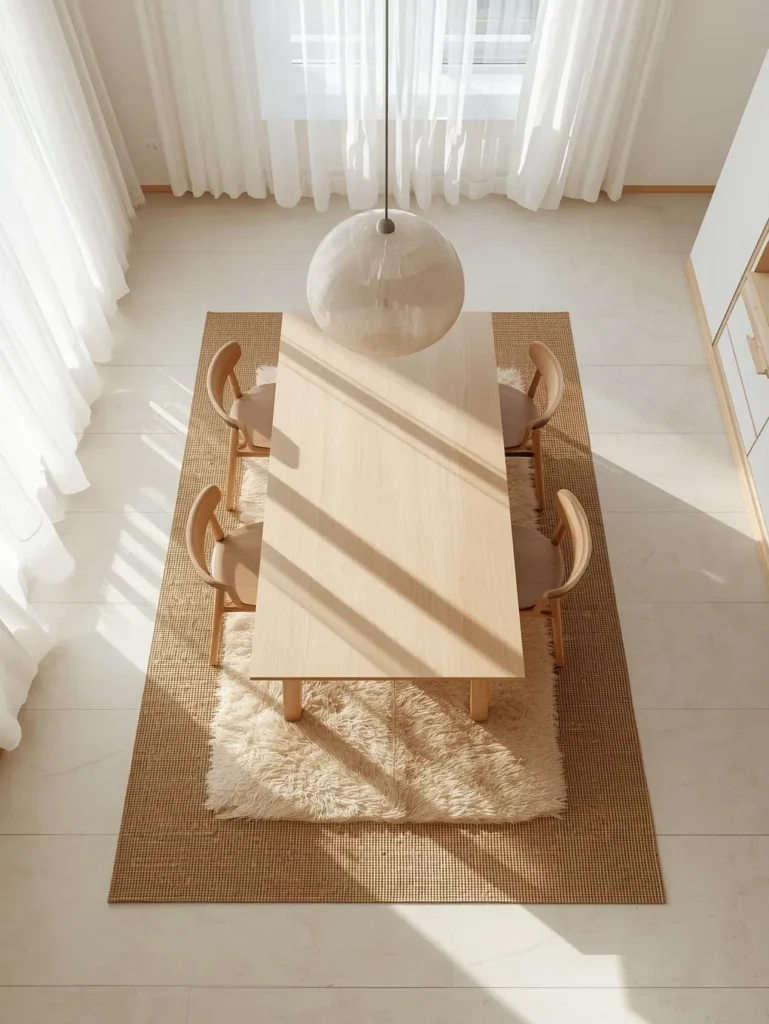
A layered rug approach instantly changes how a dining space feels by adding depth, softness, and visual balance. When you place a larger neutral base rug under a smaller textured rug, the room feels more intentional and styled. I’ve noticed this setup works especially well in open-plan homes where the dining area needs subtle separation without walls or dividers. The mix of textures also helps prevent the space from feeling flat or overly minimal, giving it a grounded and lived-in look.
This design trick works because it builds dimension without cluttering the room. The layered effect naturally draws attention to the dining table, making it feel like a defined focal point. In many homes I’ve seen, this approach transforms even basic furniture into a styled interior moment. It also improves acoustics slightly by softening sound, which is often overlooked. The result is a dining area that feels warm, cohesive, and thoughtfully designed without requiring bold colors or complex decor changes.
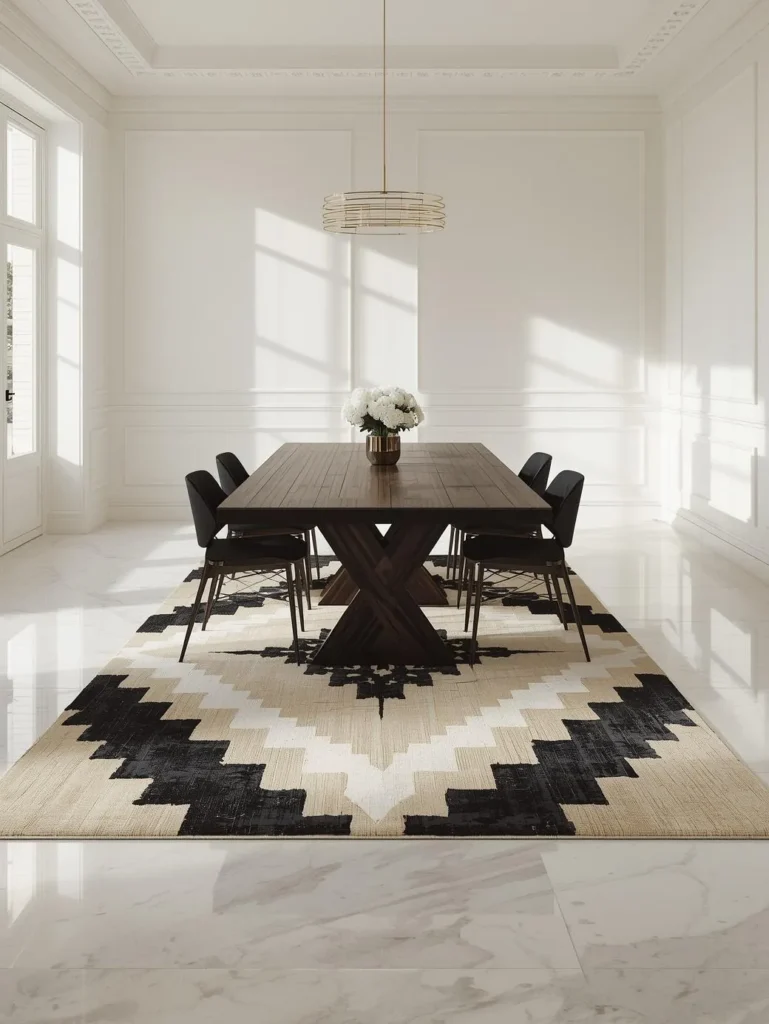
Bold Geometric Centerpiece
Key Points
- Adds strong visual personality to the dining area
- Works well in minimalist or modern interiors
- Creates a natural focal point under the table
- Breaks monotony of plain flooring
- Enhances contrast and depth in the room
A geometric rug design completely transforms a dining space by introducing structure and visual rhythm. The sharp lines and repeating patterns guide the eye naturally toward the center of the room, making the dining table feel anchored. In my experience, this type of rug works especially well in spaces that feel too plain or empty, because it instantly injects energy without adding extra furniture or decor elements.
This style works because it balances simplicity with boldness in a controlled way. The patterns add movement, while the color palette keeps everything grounded and cohesive. I’ve seen this approach used in modern apartments where homeowners want impact without clutter. It also helps hide minor stains or wear, making it practical for daily use. Overall, it creates a confident and stylish dining atmosphere that feels curated and intentional.
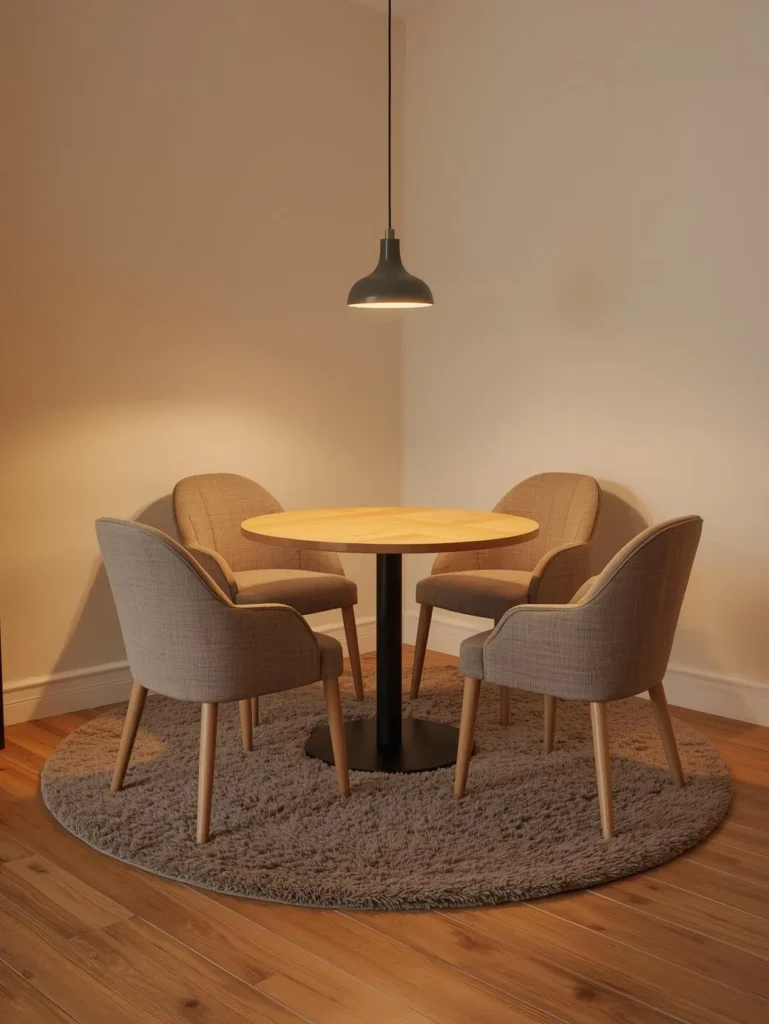
Round Table Balance
Key Points
- Enhances symmetry around round dining tables
- Creates a soft, flowing visual layout
- Makes small dining areas feel more organized
- Improves balance between furniture and floor space
- Works well in compact apartments or breakfast nooks
A round rug paired with a circular table creates a natural sense of harmony that instantly feels pleasing to the eye. The curves work together to soften the overall geometry of the room, making everything feel more fluid and connected. I’ve noticed this setup is especially effective in smaller dining areas where sharp edges can make the space feel tight or boxed in. The circular layout encourages smoother movement around the table.
This design choice works because it removes visual friction between furniture shapes. Everything aligns effortlessly, which makes the space feel more intentional and relaxed. Many designers prefer this approach for compact homes because it maximizes visual flow without adding extra elements. The rug also helps define the dining zone clearly, especially in open-plan layouts. The result is a cozy, balanced space that feels welcoming and easy to live in every day.
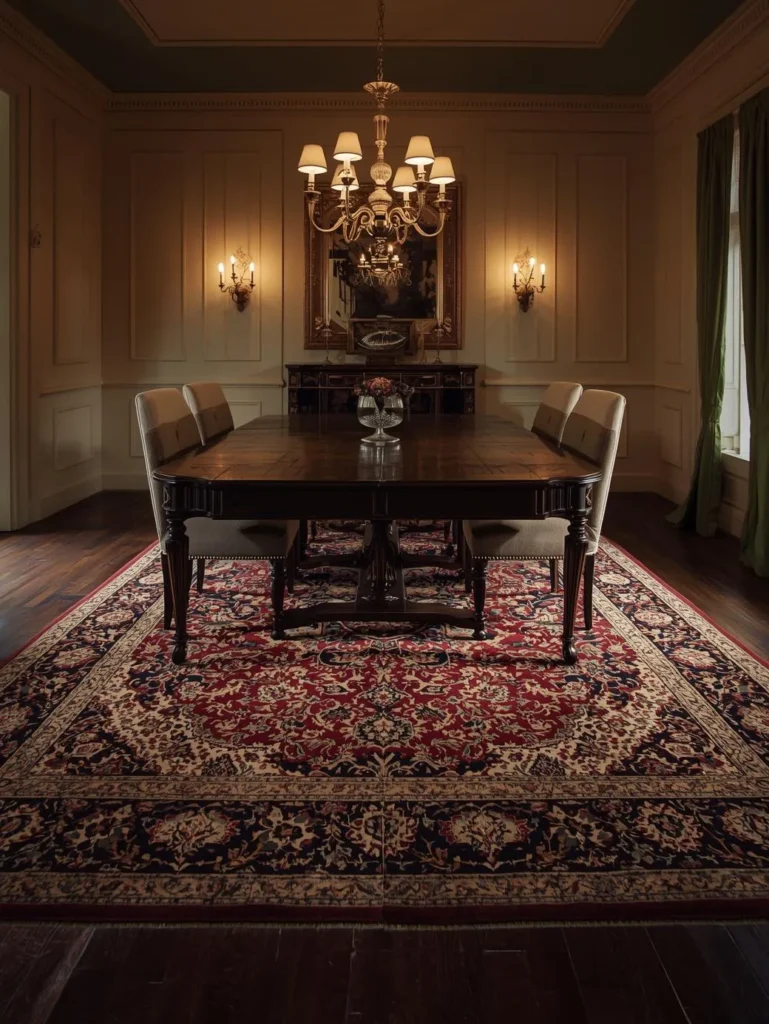
Vintage Persian Accent
Key Points
- Adds timeless character and cultural richness
- Instantly warms up neutral dining spaces
- Works beautifully with wooden furniture
- Introduces detailed pattern without modern clutter
- Creates a sophisticated, lived-in atmosphere
A vintage Persian rug brings instant depth and storytelling into a dining room. The intricate patterns and rich tones create a sense of history that modern rugs often cannot replicate. I’ve seen this style completely transform plain dining areas into elegant, character-filled spaces. It works especially well when paired with wooden or antique furniture, as it enhances warmth and creates a naturally cohesive look without needing additional decorative elements.
This approach works because it blends artistry with function in a very balanced way. The detailed patterns hide everyday wear while still maintaining visual appeal over time. In many homes I’ve observed, this style becomes the centerpiece of the entire room, even more than the dining table itself. It adds emotional warmth, making meals feel more intentional and connected. The result is a dining space that feels timeless, welcoming, and richly layered in personality.
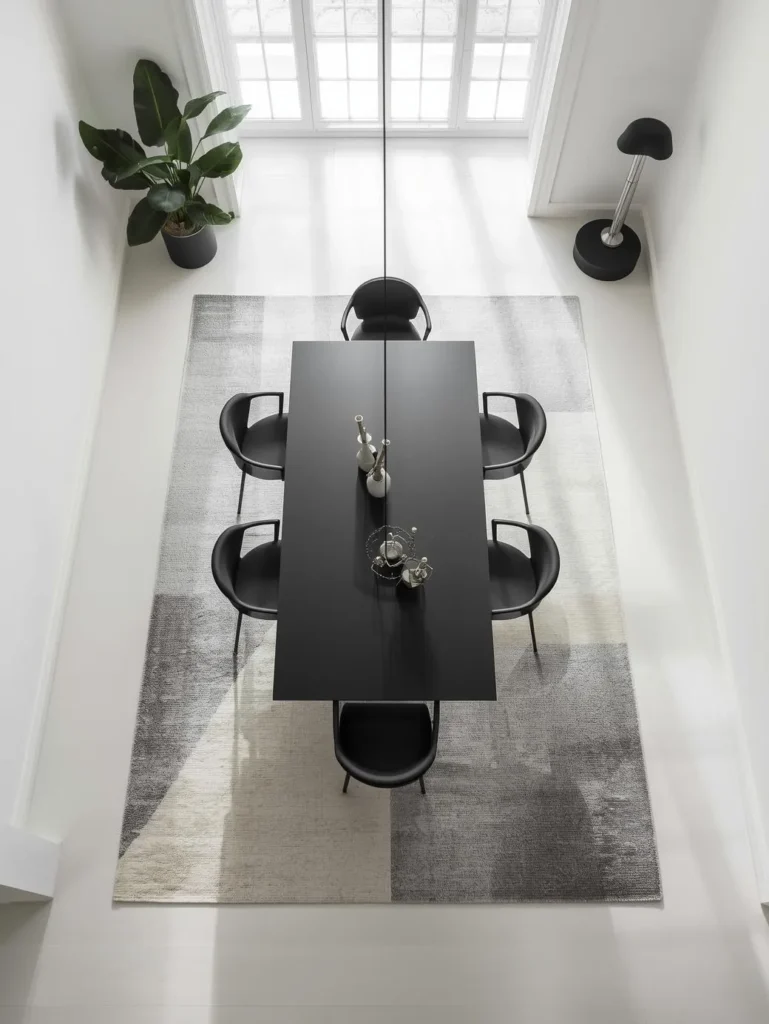
Minimal Monochrome Base
Key Points
- Creates a clean, modern dining foundation
- Works well in black-and-white interiors
- Makes furniture look more intentional and styled
- Reduces visual clutter in busy rooms
- Easy to pair with different decor styles
A monochrome rug foundation instantly makes a dining space feel more refined and organized. The soft contrast between gray, black, and white tones creates a calm visual rhythm that doesn’t compete with the furniture. I’ve noticed this style is especially effective in homes where people want a modern look without adding too many decorative elements. It keeps everything grounded while still feeling stylish and purposeful in everyday use.
This design works because it simplifies the visual language of the room. Instead of multiple colors fighting for attention, everything blends into a cohesive palette. That’s why many designers recommend monochrome rugs for dining areas that already have bold furniture or lighting. In real homes, this setup makes the space feel bigger, cleaner, and more intentional, especially when paired with minimal decor and structured furniture shapes.
Soft Boho Texture
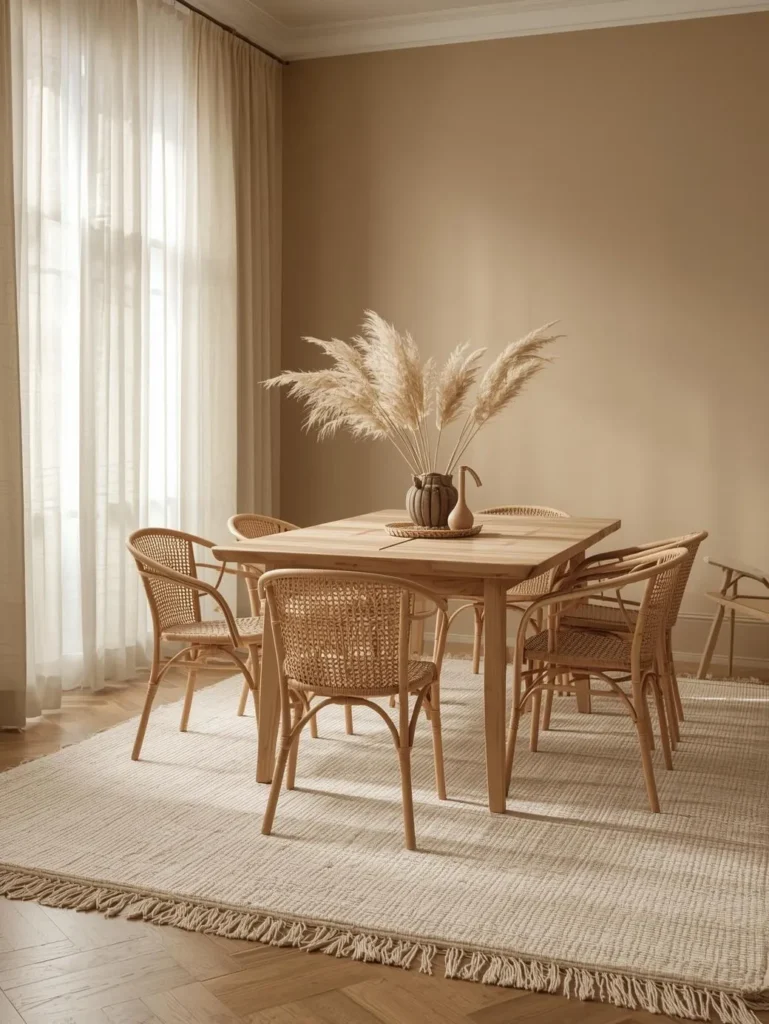
Key Points
- Adds warmth and relaxed character to dining spaces
- Perfect for boho or earthy interior styles
- Softens hard flooring visually
- Introduces natural woven textures
- Creates an inviting, lived-in atmosphere
A soft boho rug instantly brings warmth and comfort into a dining room without overwhelming the space. The natural fibers and gentle textures create a relaxed foundation that feels effortless yet thoughtfully styled. I’ve seen this approach work beautifully in homes where people want a casual, inviting dining area that still looks curated. It blends especially well with wood, rattan, and neutral-toned furniture for a cohesive earthy look.
This style works because it introduces texture in a subtle, natural way. Instead of bold patterns, the woven details create depth that you only notice when you look closer. In my experience, this makes the room feel more comfortable and lived-in without appearing messy or unplanned. It also helps soften acoustics and adds warmth underfoot, making meals feel more relaxed and connected in everyday family settings.
High Contrast Black
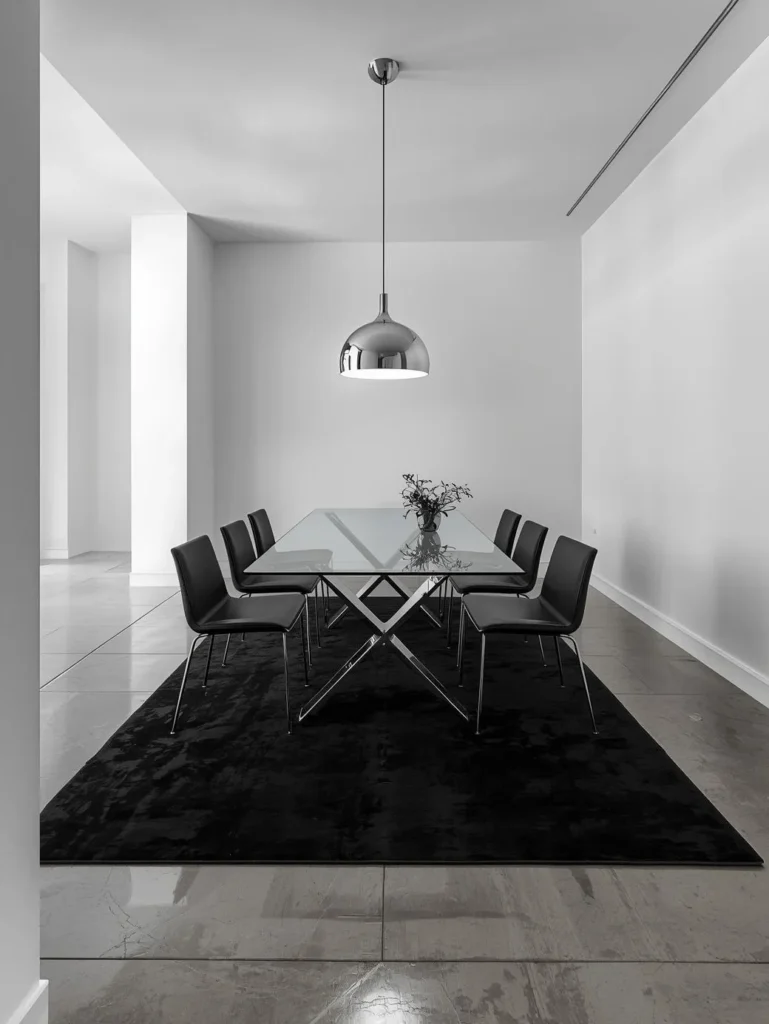
Key Points
- Creates bold visual contrast in dining areas
- Works well with modern and industrial styles
- Highlights furniture shapes clearly
- Adds a dramatic, luxury-inspired touch
- Anchors bright or white interiors effectively
A black rug in a dining space creates an immediate sense of drama and sophistication. The strong contrast against lighter walls or furniture makes every element feel more defined and intentional. I’ve noticed this design choice is often used in modern apartments where people want a bold yet minimal aesthetic. It helps ground the space while still keeping the overall design clean and structured.
This idea works because contrast naturally draws the eye and builds visual hierarchy. The dining table becomes the focal point without needing extra decor. In many interiors I’ve observed, a black rug also makes surrounding colors pop more vividly, especially wood tones and metallic finishes. It’s a powerful choice for anyone wanting a sleek, upscale dining atmosphere that feels modern, confident, and visually striking.
Soft Pastel Wash
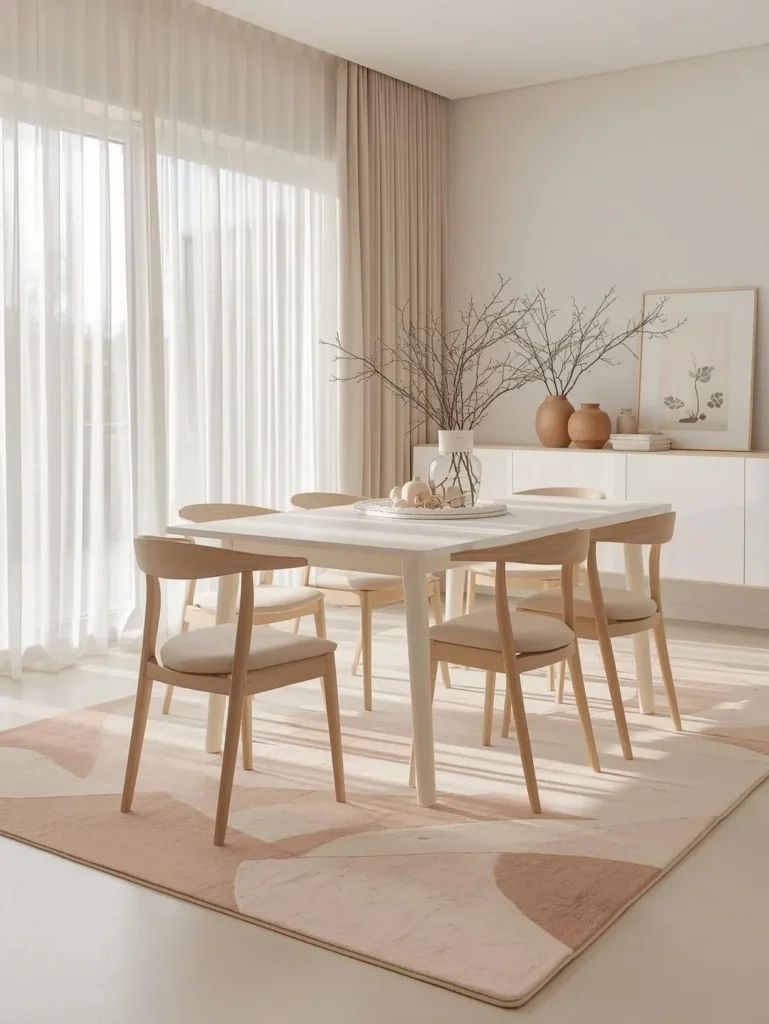
Key Points
- Adds a gentle, airy feeling to dining spaces
- Works beautifully in bright, natural light rooms
- Softens harsh or plain interiors
- Introduces subtle color without overpowering
- Ideal for cozy, modern feminine aesthetics
A pastel-toned rug can completely shift the mood of a dining space by making it feel lighter and more welcoming. The soft color palette creates a gentle foundation that doesn’t overpower the room but still adds personality. I’ve seen this work especially well in homes with lots of natural light, where the colors feel even more airy and delicate throughout the day.
This approach works because it balances color with softness, avoiding visual heaviness. Instead of bold statements, the rug quietly enhances the atmosphere, making everything feel more relaxed. In my experience, pastel rugs are perfect for small dining areas because they open up the space visually. They also pair beautifully with simple furniture, creating a calm and inviting dining environment that feels fresh and effortlessly styled.
Striped Length Effect
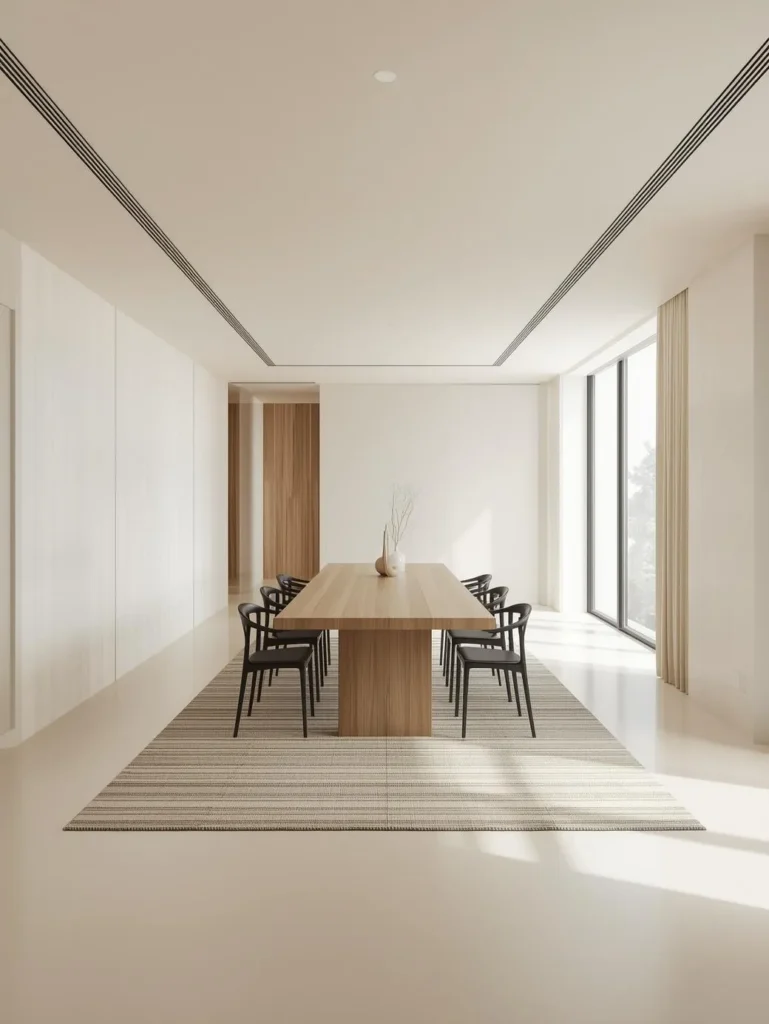
Key Points
- Visually elongates narrow dining rooms
- Adds subtle pattern without overpowering decor
- Guides the eye along the table length
- Works well in small or compact spaces
- Keeps design clean yet structured
A striped rug can completely change how a dining room feels by visually stretching the space. The linear pattern naturally guides the eye along the length of the table, making the room appear longer and more open. I’ve noticed this trick is especially useful in narrow apartments where the dining area feels tight or confined. It creates a sense of direction without adding extra furniture or decor elements.
This design works because it uses visual flow to improve spatial perception. Instead of filling the room with bold patterns, the subtle stripes create movement that feels natural and calming. In many real homes I’ve seen, this approach makes even small dining areas feel more organized and spacious. It also keeps the focus on the table while still adding gentle texture underfoot, resulting in a clean and balanced dining environment.
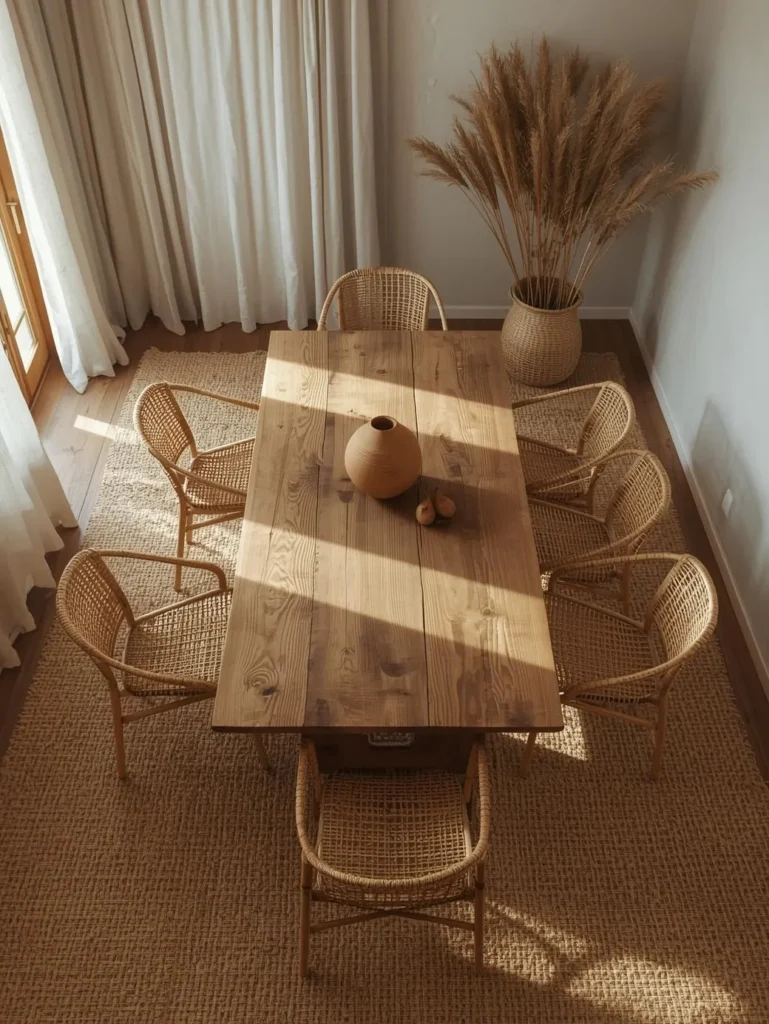
Natural Jute Layer
Key Points
- Brings organic warmth to dining interiors
- Highly durable and eco-friendly material choice
- Works with rustic, coastal, or boho styles
- Adds natural texture without visual clutter
- Grounds furniture in a simple, earthy way
A natural jute rug instantly introduces an earthy, grounded feeling into a dining room. Its raw texture and neutral tone make it one of the easiest ways to soften a space without adding visual noise. I’ve seen this material work especially well in homes that lean toward organic or minimalist design styles, where simplicity and natural elements are the main focus of the interior.
This idea works because it connects the dining area to natural materials in a subtle but powerful way. The woven texture adds depth under the table while still keeping the overall look clean and understated. In my experience, jute rugs are also practical because they handle daily use well while aging gracefully. The result is a warm, relaxed dining environment that feels both stylish and effortlessly natural.
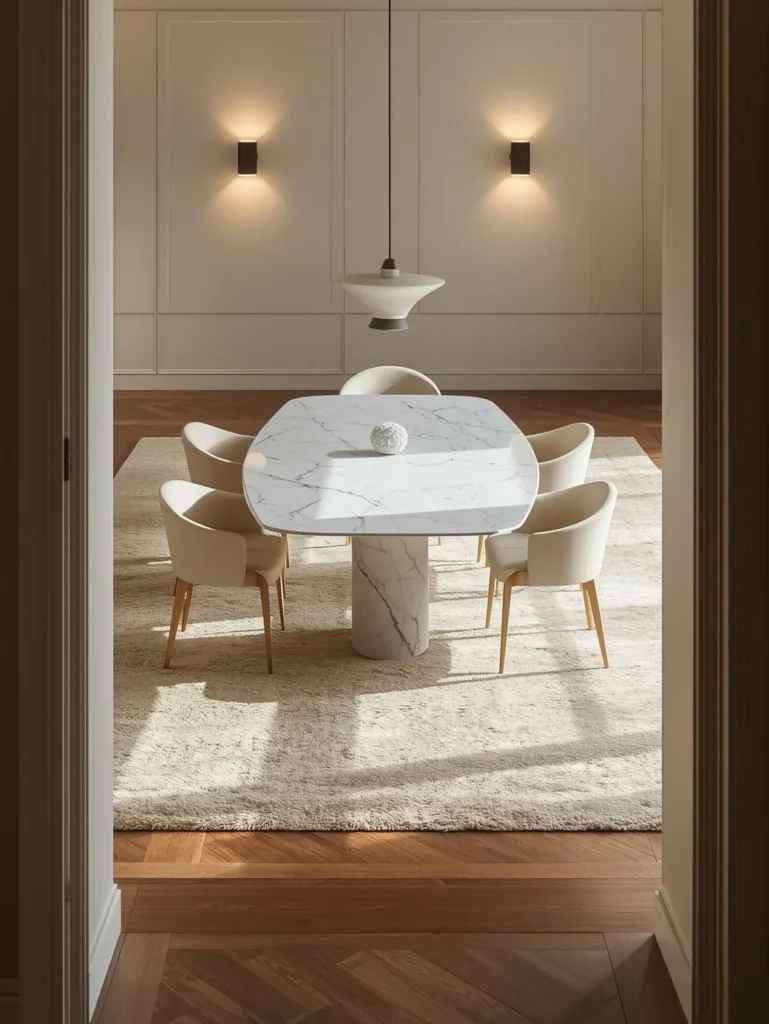
Soft Border Frame
Key Points
- Clearly defines the dining zone in open spaces
- Adds subtle structure without bold patterns
- Frames furniture beautifully for a polished look
- Works well in modern and transitional interiors
- Helps visually anchor the dining table
A bordered rug creates a natural frame that instantly organizes the dining area. The subtle edge detail helps define the space without relying on heavy patterns or strong colors. I’ve noticed this style is especially useful in open-plan homes where the dining area needs gentle separation from the living or kitchen zones. It creates structure while still feeling soft and visually calm.
This approach works because framing naturally draws attention inward toward the table. It gives the furniture a sense of placement and importance without overwhelming the room. In many interiors I’ve seen, this small detail makes the dining space feel more intentional and designed. It also helps the rug look more tailored, adding a subtle layer of sophistication that elevates even simple furniture setups.
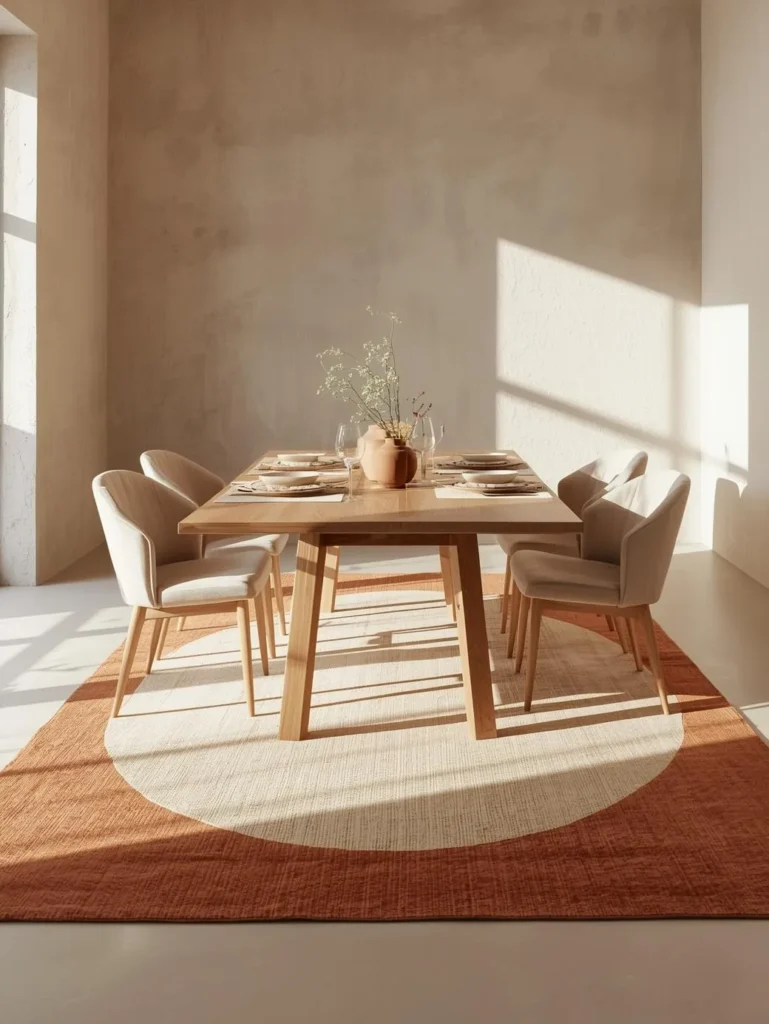
Muted Earth Tones
Key Points
- Creates a warm, grounded dining atmosphere
- Blends beautifully with natural wood furniture
- Adds color without being too bold
- Enhances cozy, organic interior styles
- Makes dining spaces feel welcoming and calm
Muted earth-tone rugs bring a natural warmth that immediately makes a dining space feel more inviting. The soft blend of terracotta, beige, and olive tones creates a grounded palette that feels connected to nature. I’ve noticed this style works especially well in homes that want color but still prefer a calm and balanced interior. It adds personality without overpowering the rest of the decor.
This design works because it mirrors natural landscapes, which the eye finds inherently comforting. Instead of sharp contrasts, the colors blend smoothly, creating harmony under the dining table. In real homes, this approach helps soften modern interiors that might otherwise feel too stark. The result is a cozy, balanced dining environment that feels both stylish and emotionally comfortable for everyday use.
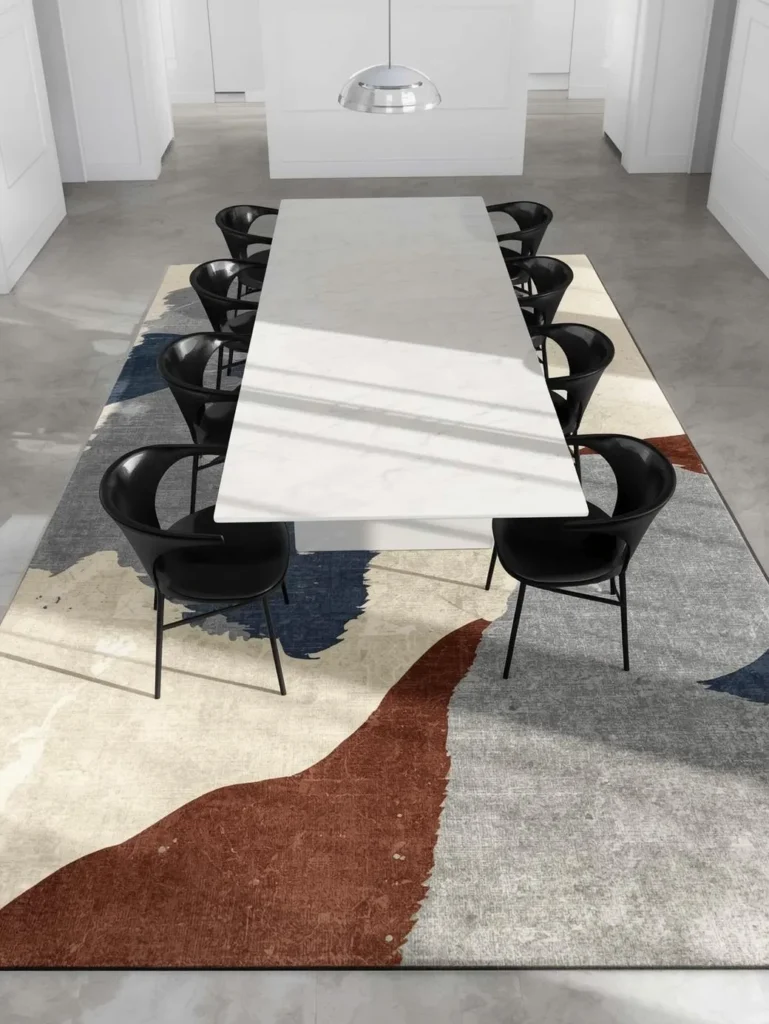
Artistic Abstract Splash
Key Points
- Turns the rug into a statement art piece
- Adds energy and creativity to dining spaces
- Perfect for modern or eclectic interiors
- Breaks up plain or neutral rooms instantly
- Makes the dining area feel unique and curated
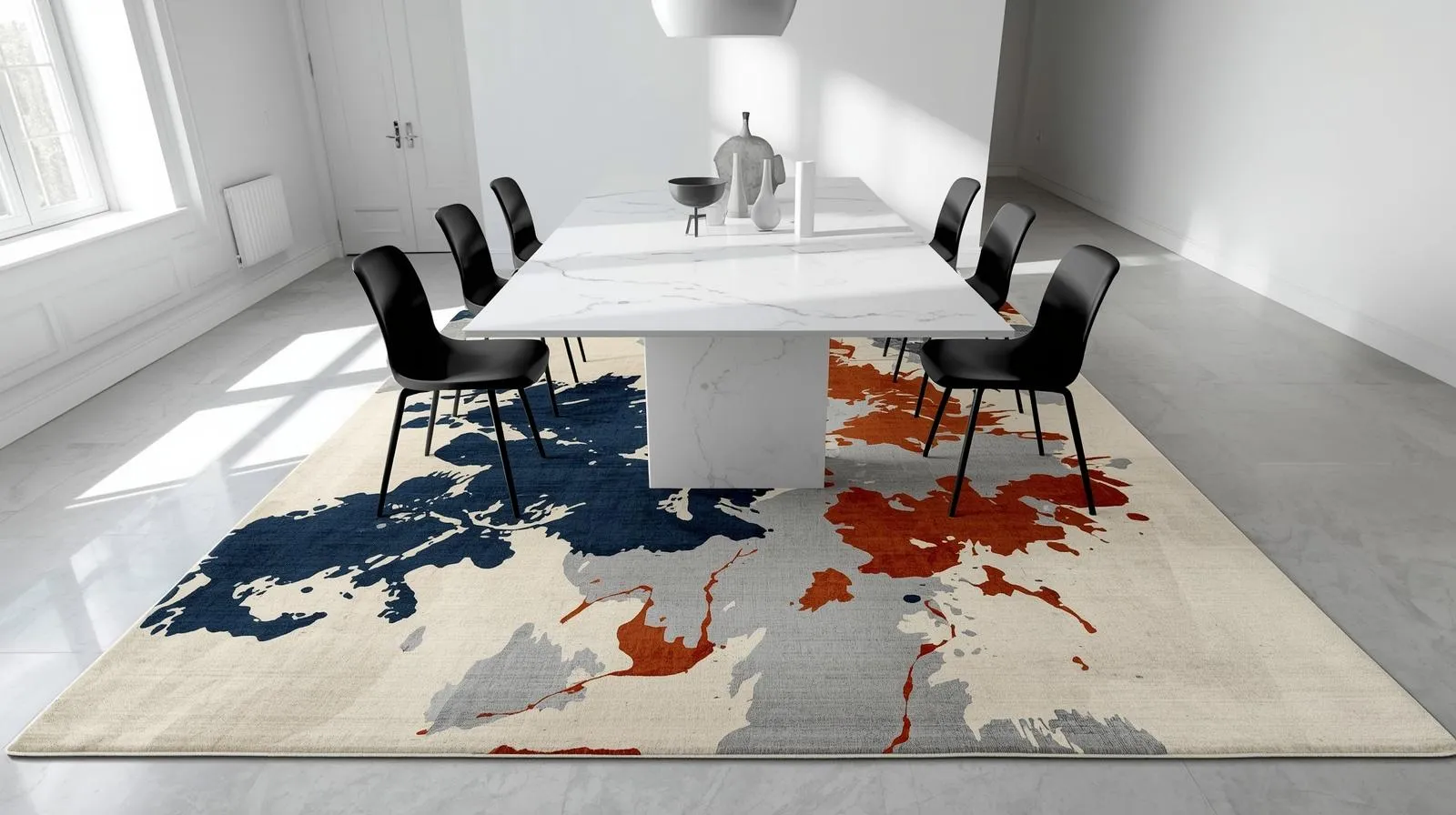
An abstract splash rug instantly transforms a dining room into a creative focal point. The flowing colors and artistic patterns feel more like a painting underfoot than a traditional floor covering. I’ve seen this style completely change the mood of simple dining spaces by adding personality and movement. It works especially well in modern homes where clean furniture needs a bold visual anchor.
This idea works because it introduces controlled chaos in a visually pleasing way. Instead of strict patterns, the organic shapes create energy that feels dynamic yet intentional. In my experience, this type of rug often becomes the conversation piece of the room. It draws attention immediately, making even basic dining furniture look curated and designer-inspired without needing additional decorative effort.
Soft Wash Neutral Grid
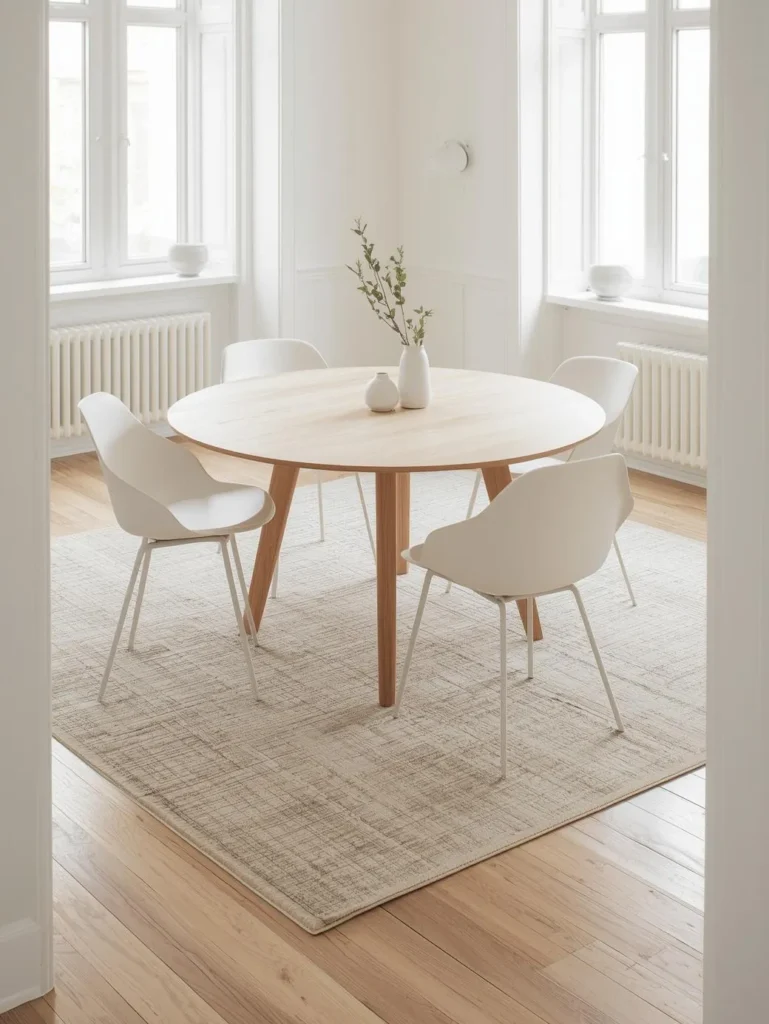
Key Points
- Adds subtle structure without visual heaviness
- Perfect for minimalist dining interiors
- Keeps space calm and highly organized
- Works well with modern Scandinavian styles
- Enhances balance without distracting patterns
A soft grid rug introduces just enough structure to make a dining space feel organized without being visually loud. The faint pattern creates a sense of order that blends seamlessly with minimalist interiors. I’ve noticed this design works particularly well in homes where people want calm, clutter-free aesthetics but still need subtle visual interest under the dining table.
This style works because it balances repetition with softness. The grid gives direction to the space, while the muted tones keep everything gentle and cohesive. In many interiors I’ve seen, this approach helps anchor furniture neatly without overpowering the room. It creates a peaceful dining environment that feels intentional, clean, and effortlessly modern, making everyday meals feel more structured and visually soothing.
Soft Ombre Fade
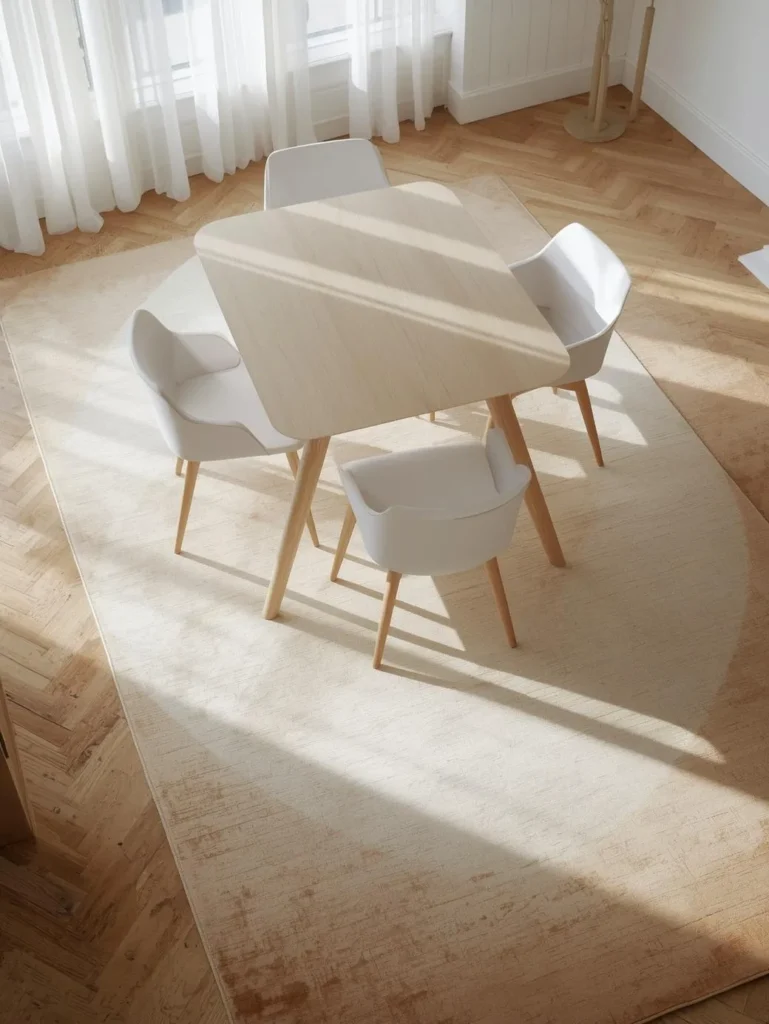
Key Points
- Creates a gentle visual transition across the floor
- Adds softness without strong patterns
- Works beautifully in modern calm interiors
- Makes dining space feel more artistic and airy
- Subtle but visually engaging foundation
A soft ombre rug brings a gentle gradient effect that instantly feels calming in a dining space. The slow transition of color creates movement without any harsh lines, making the room feel more fluid and peaceful. I’ve noticed this style works especially well in bright interiors where you want subtle design detail without overpowering the furniture or walls.
This design works because it mimics natural light transitions, which the eye finds relaxing. Instead of bold patterns, it uses color blending to add depth in a quiet way. In many homes I’ve seen, this type of rug makes the dining area feel more spacious and visually soft. It’s perfect for creating a refined, modern atmosphere that still feels warm and inviting.
Checkerboard Soft Mix
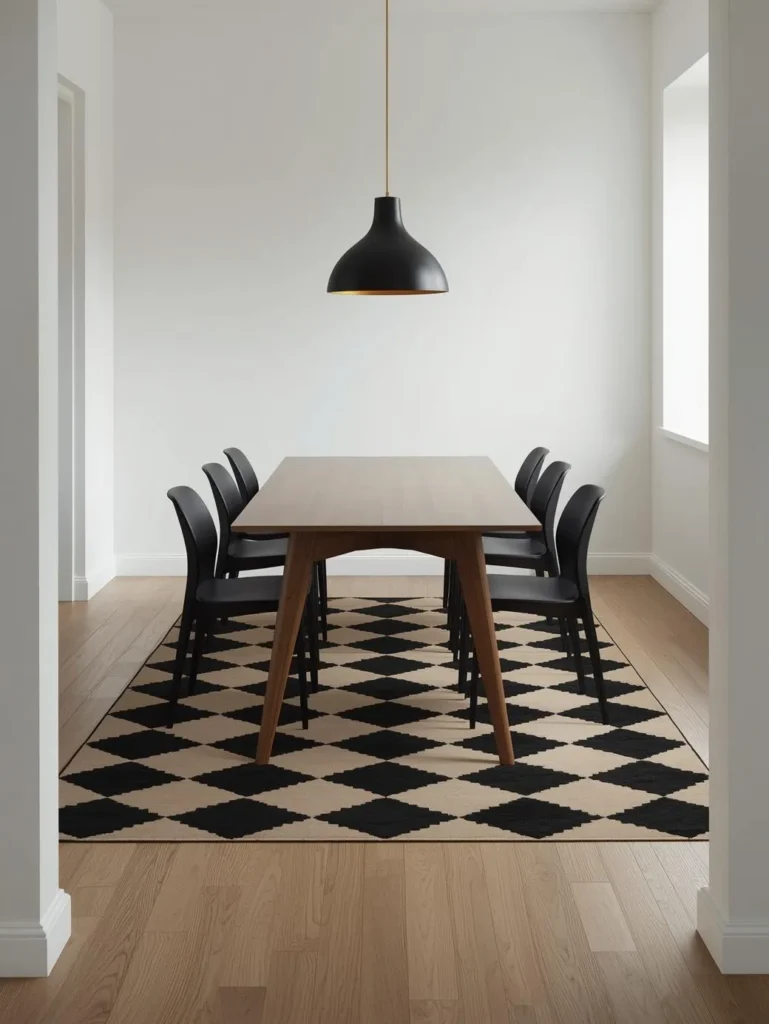
Key Points
- Adds playful yet structured visual rhythm
- Works in modern and retro-inspired interiors
- Defines dining space clearly with pattern
- Balances boldness with neutral tones
- Creates a stylish focal foundation
A soft checkerboard rug introduces rhythm and structure into a dining space without feeling overwhelming. The alternating tones create a balanced visual pattern that instantly draws attention to the center of the room. I’ve seen this work beautifully in homes that want a mix of modern and retro influence without going too bold or chaotic.
This idea works because repetition naturally creates harmony for the eye. The pattern organizes the space while still keeping it visually interesting. In real interiors, it helps anchor the dining table and makes the room feel more styled without extra decor. The result is a clean yet playful dining environment that feels structured, modern, and slightly nostalgic at the same time.
Soft Oval Placement
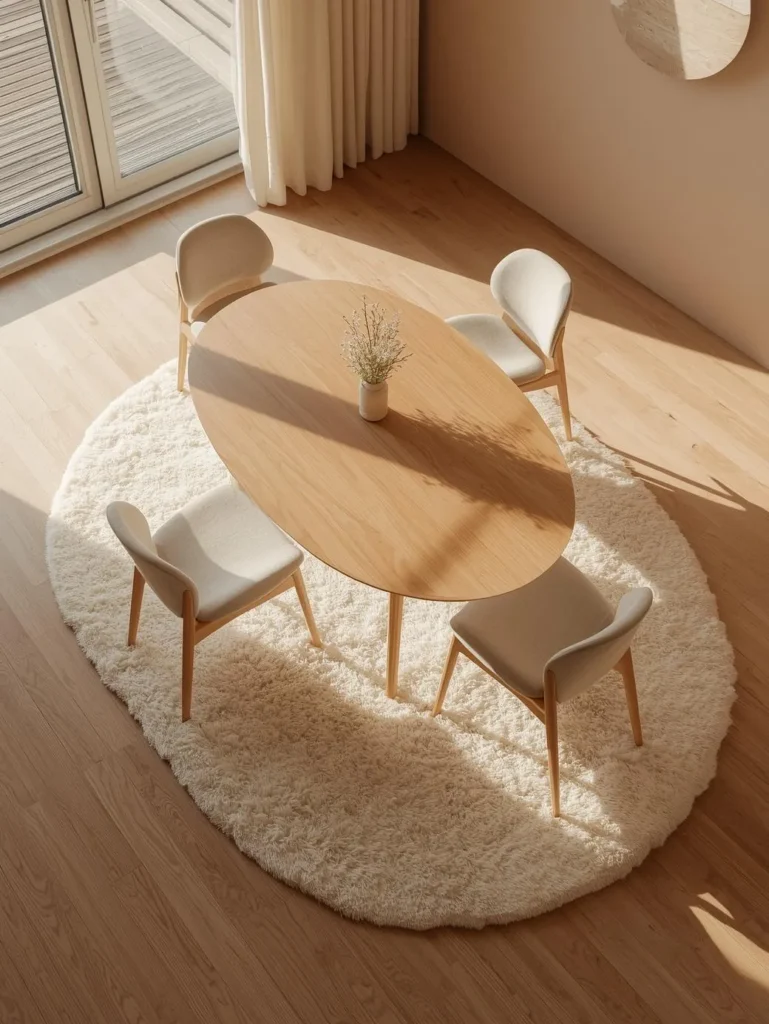
Key Points
- Enhances harmony between furniture shapes
- Ideal for oval or rounded dining tables
- Softens sharp edges in the room
- Creates smooth visual flow in compact spaces
- Makes layout feel balanced and intentional
An oval rug creates instant harmony when paired with curved dining tables, making the entire setup feel naturally balanced. The soft edges remove harsh lines from the space, creating a smoother and more inviting visual flow. I’ve noticed this works especially well in smaller dining areas where sharp corners can make the room feel tight or overly structured.
This design works because matching shapes creates subconscious visual comfort. The rug supports the table rather than competing with it, which makes everything feel intentional. In many homes I’ve observed, this setup helps the dining area feel more cohesive and thoughtfully designed. It’s a simple change that makes a big difference in overall spatial balance and comfort.
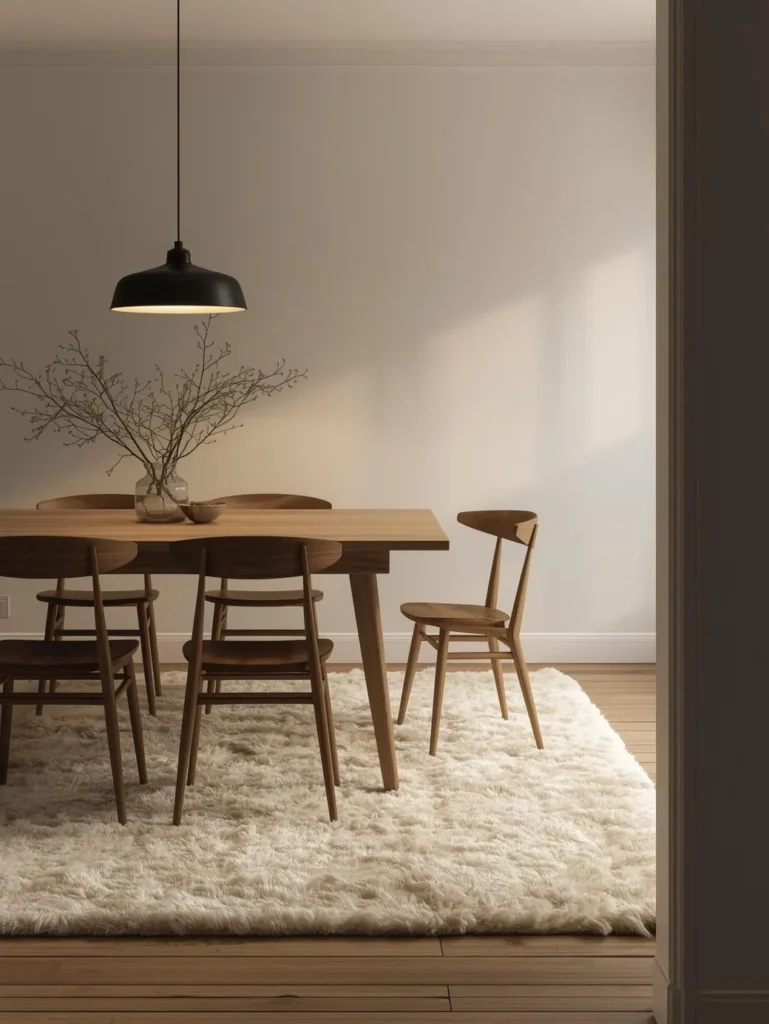
Textured Wool Depth
Key Points
- Adds warmth and softness under dining furniture
- Highly durable and long-lasting material
- Enhances acoustic comfort in the room
- Works with both modern and rustic styles
- Creates a cozy, grounded atmosphere
A textured wool rug adds depth and comfort to a dining space in a very natural way. The soft fibers make the room feel warmer and more inviting, especially in minimalist interiors that can sometimes feel too clean or cold. I’ve noticed this material works beautifully in homes where comfort and durability are equally important.
This idea works because texture brings dimension without needing color or pattern. The subtle surface variation catches light gently, adding visual richness under the dining table. In real homes, wool rugs also improve comfort during long meals and gatherings. The result is a dining space that feels cozy, practical, and naturally elegant without any unnecessary design complexity.
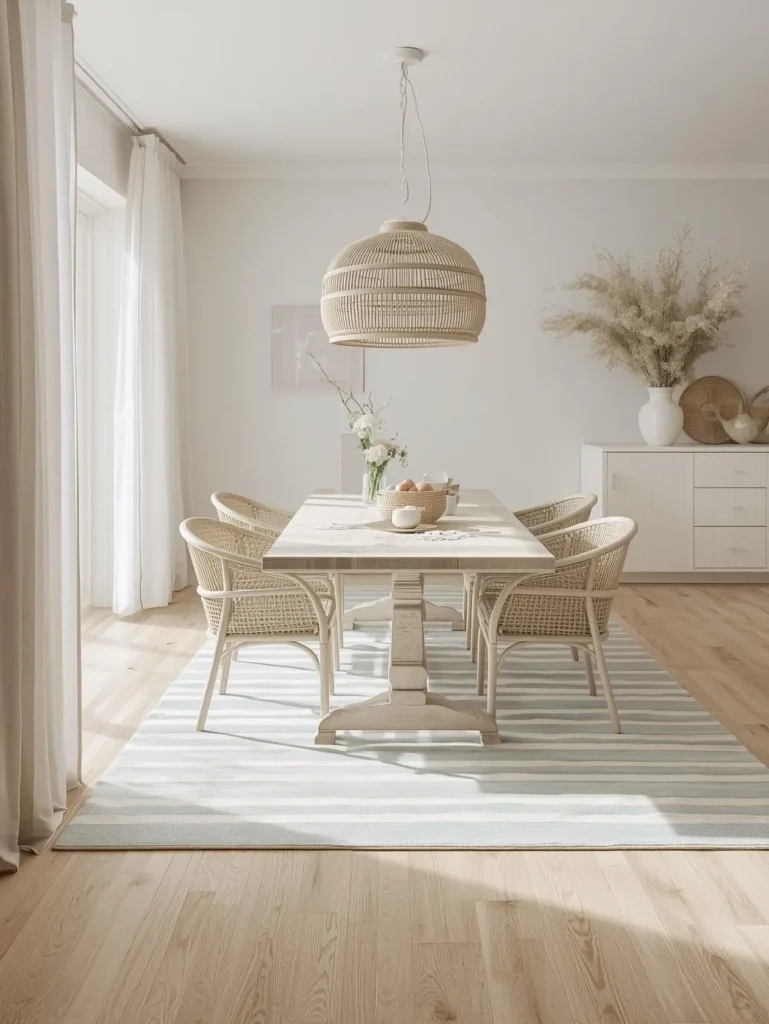
Soft Coastal Stripes
Key Points
- Brings fresh coastal energy into dining spaces
- Light colors make rooms feel more open
- Perfect for beach or summer-inspired interiors
- Adds subtle pattern without heaviness
- Creates airy and relaxed dining mood
A coastal striped rug instantly makes a dining room feel lighter and more refreshing. The soft blue and sandy tones create a relaxed atmosphere that feels connected to the sea. I’ve seen this style work especially well in bright homes where natural light enhances the airy, open feeling of the space.
This design works because it uses color psychology to create calmness and space. The soft stripes add movement without overpowering the room. In many coastal-inspired interiors I’ve observed, this rug style helps maintain a clean yet welcoming dining environment. It’s perfect for creating a breezy, vacation-like feel that makes everyday meals feel more relaxed and enjoyable.
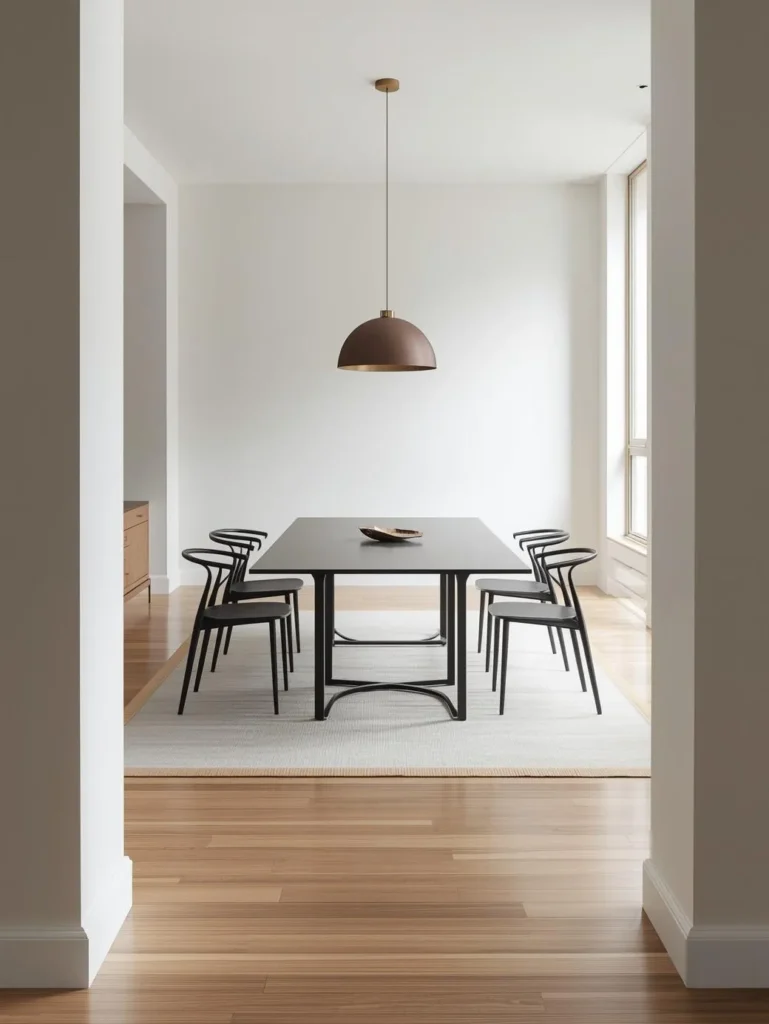
Framed Minimal Center
Key Points
- Creates a clear visual dining zone
- Adds subtle elegance without strong patterns
- Helps center furniture perfectly
- Works well in modern minimalist homes
- Makes space feel organized and intentional
A framed center rug design gives a dining space immediate structure without visual clutter. The subtle inner border naturally draws attention to the table, creating a clean focal point. I’ve noticed this style is often used in modern homes where simplicity and order are key design priorities, helping the dining area feel more refined and intentional.
This idea works because framing enhances spatial clarity. It subtly separates the dining zone from the rest of the room while keeping everything visually light. In real interiors, this approach makes furniture placement feel more precise and balanced. The result is a polished dining environment that feels calm, structured, and effortlessly modern without relying on bold patterns or colors.
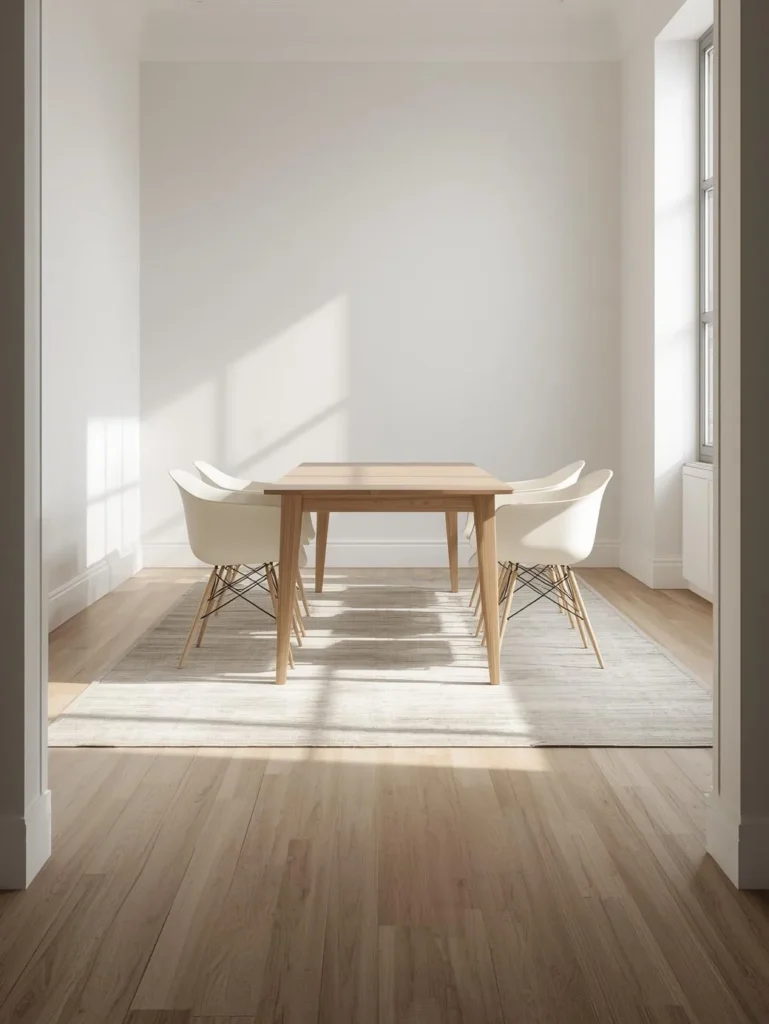
Soft Shadow Gradient
Key Points
- Adds depth through light and shading effects
- Keeps design minimal yet visually interesting
- Works beautifully in soft natural lighting
- Enhances calm, modern interiors
- Creates subtle movement without patterns
A shadow gradient rug brings quiet depth into a dining space without using bold design elements. The soft transitions of light and shade make the floor feel more dynamic while still remaining minimal. I’ve seen this approach work especially well in bright rooms where natural light enhances subtle tonal changes throughout the day.
This design works because it uses contrast in a very gentle way. Instead of patterns or colors, it relies on light variation to create visual interest. In many interiors I’ve observed, this style helps keep the dining area feeling calm but not flat. The result is a soft, atmospheric space that feels modern, balanced, and effortlessly refined.
Soft Shadow Layers
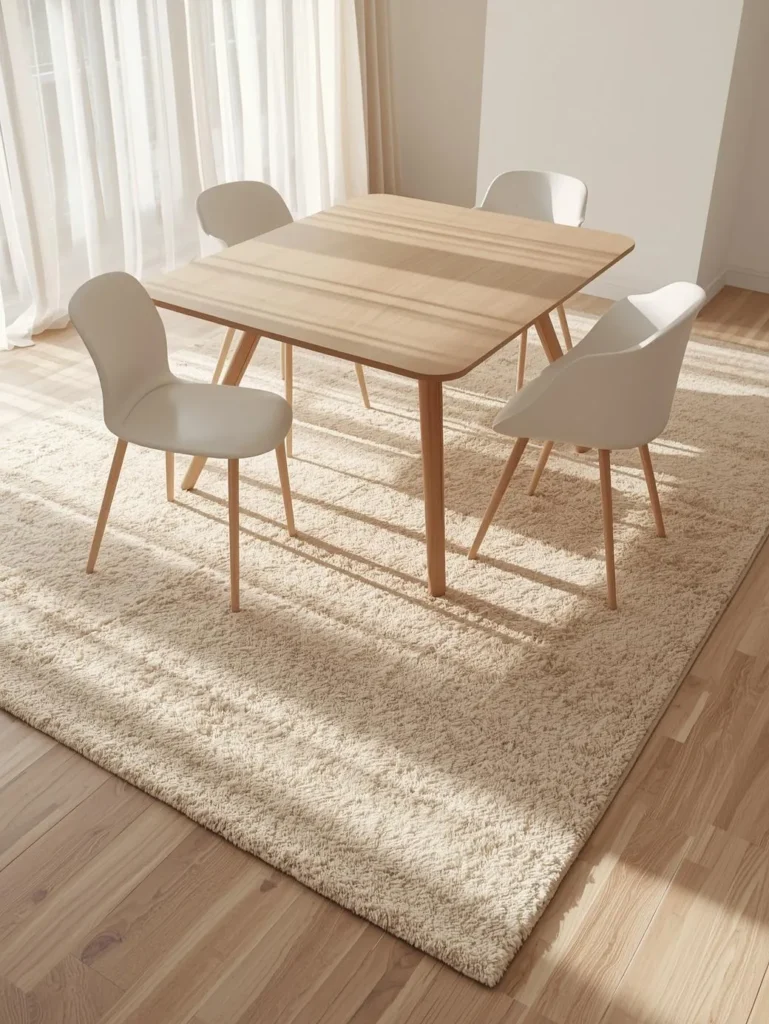
Key Points
- Adds subtle depth without patterns or colors
- Enhances natural light and shadows in the room
- Works perfectly in minimalist dining spaces
- Creates a calm, airy visual foundation
- Makes flooring feel more dimensional and soft
A soft shadow-layer rug brings a quiet elegance into the dining room by playing with tone instead of pattern. The gentle shifts in shading create a sense of depth that feels natural and calming. I’ve noticed this style works especially well in bright interiors where sunlight naturally enhances the layered effect throughout the day, making the space feel alive but still minimal.
This idea works because it uses visual depth in a very subtle way. Instead of bold prints, the rug relies on tonal variation to add interest without distraction. In many modern homes I’ve seen, this approach helps the dining area feel more peaceful and spacious. The result is a refined, understated foundation that quietly elevates the entire room without overpowering any furniture or decor.
Conclusion (≈100 words)
These ideas show how powerful a simple rug can be in transforming the entire dining atmosphere. With the right styling, your space can feel warmer, more balanced, and visually complete without expensive renovations.
The beauty of these dining room rug ideas is how easily they adapt to any home style—modern, cozy, bold, or minimal. I’ve seen even the smallest changes under a dining table completely shift how a room feels and functions.
Now it’s your turn, save your favorite ideas on Pinterest, try one in your own dining space, and share this inspiration with someone planning a home refresh. Small changes can truly create stunning transformations.